
healthy home: tips and ideas for safer furniture & decor

Many of us moms and caregivers want to make our home “Pinterestworthy.” We follow other trendy moms and designers on Instagram and copy their style and aesthetic. I do this too - it is fun and inspiring!
However, what I have noticed is that many of these products, home goods, and kitchen supplies look beautiful, but are, sadly, in fact toxic.
Over the years, I have done extensive research in an attempt to make my home as non-toxic as possible. I am extremely sensitive to chemicals, and of course, I want my children to live in a chemical-free home.
For those of you who are just beginning on your journey to a “clean” living, my hope is that these ideas serve as a starting point. For those of you who have been at this for a while, maybe you will learn one new thing! I know I am constantly learning from other moms.
One more thing…none of this should ever be overwhelming or cause fear. I always believe that the more you know and better inform yourself, the stronger you will be. This information shouldn’t cause guilt, fear, or worry, but instead give us moms a sense of empowerment and a tiny bit of control over our environment. Because I don’t know about you, but lately I feel like I have no control over anything.
Where to begin…
This post will talk about furniture and decorative home goods: (furniture, rugs, decor), which can contain volatile organic compounds, or VOCs. Studies show that these chemicals accumulate in the dust around our homes. We then ingest them, breathe them in, or soak them in through our skin as we live in our homes and go about our day.
Volatile organic compounds (VOCs):
VOCs include formaldehyde, benzene, toluene, flame retardants, and adhesives used in pressed wood, synthetic foam, fabrics, and finishes. These common chemicals are released into the air through off-gassing.
When you buy a piece of furniture or a rug, and you notice a strong smell, what do you do? That is the off-gassing. These chemicals can stay in your home for weeks or even months.
What is formaldehyde?
According to the EPA, the most common VOC, formaldehyde, is actually classified as a Class 1 Human Carcinogen. It is found in the adhesives and resins, which is usually used in engineered wood furniture.
What are flame retardants?
Polyurethane foam, which is sprayed onto the fluffy stuffing inside your favorite new couch, often contains flame retardants, particularly organophosphate flame retardants (OPFRs), which can disrupt the endocrine system, impact behavioral development, and contribute to respiratory problems such as asthma.
What do these chemicals do to us acutely?
Do you suffer from asthma or allergies? Exposure to these chemicals can exacerbate your symptoms. They can also contribute to overall respiratory irritation, headaches, dizziness, nausea, and irritation in the eyes, nose, and throat.
What are the long-term effects?:

Studies show that long-term damage from VOCs and flame retardants includes:
Cardiovascular disease risk, including hypertension and angina
Increased risk of multiple cancers, especially nasal and blood cancers
Chronic respiratory tract damage and asthma
Neurobehavioral and developmental impairments
What does this all mean for our families?:
Growing infants, toddlers, children, and teenagers are particularly vulnerable to the harmful effects of flame retardants and VOCs because of their developing respiratory and immune systems.
Infants and toddlers are at a higher risk because they crawl all over our floors and put everything in their mouths!
Children and teenagers are also vulnerable to these chemicals, as they are in a period of their lives when they are experiencing physical, neurological, and hormonal development. Any kind of prolonged exposure to these chemicals can disrupt their endocrine systems, which are the system that controls growth, puberty, and reproduction.
I have listed the short-term consequences of these chemicals, but don’t forget that studies show that there is also long-term damage:
Cardiovascular disease risk, including hypertension and angina
Increased risk of multiple cancers, especially nasal and blood cancers
Chronic respiratory tract damage and asthma
Neurobehavioral and developmental impairments
So what can we do? I’ve put together a small list of ideas on how to create a home that is free from toxic chemicals. Hopefully, it inspires you to think twice before buying that cute piece of furniture!
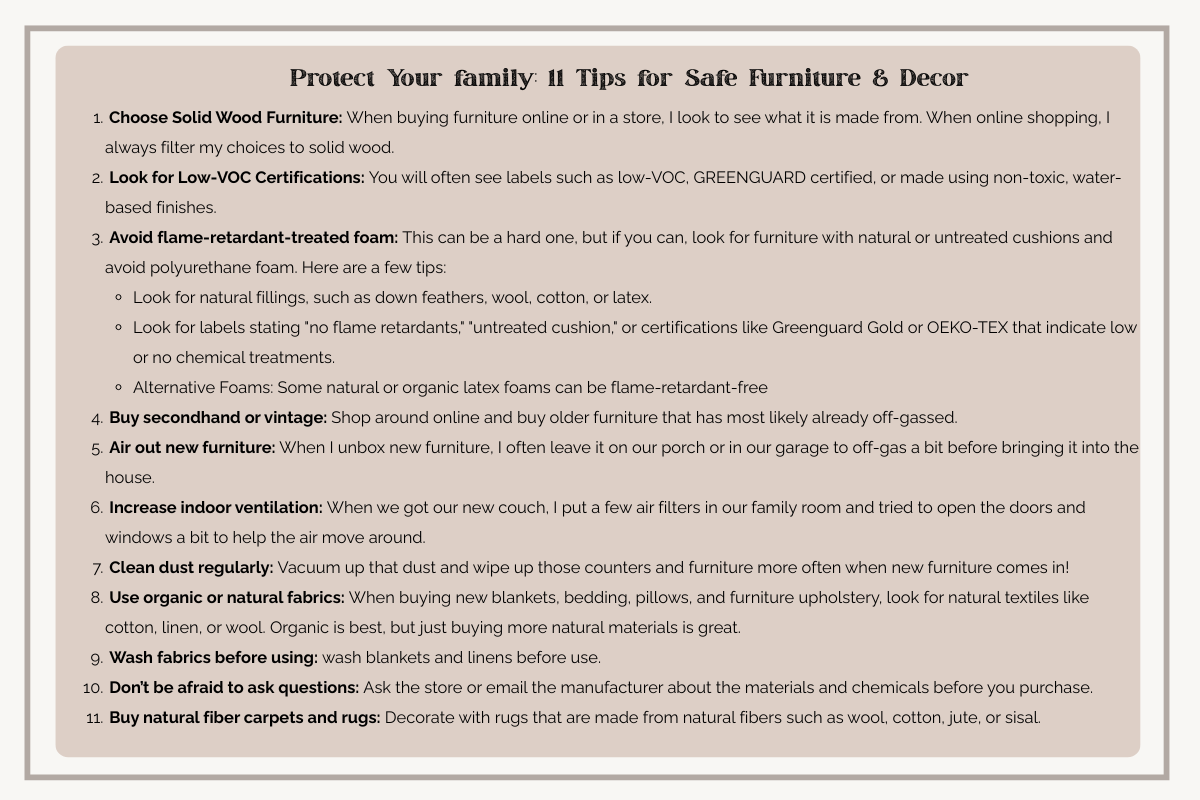
I spend a lot of my time researching products for my family. Over the years, I have begun to curate a list of healthier home decor and products that I use and recommend to others. Some of the items I recommend are available through Amazon, and I may earn a small commission from purchases made through links on my site—at no extra cost to you. Check out my disclosure policy here.
Of course, my list is just a small portion of what is available online! Let it serve as a jumping-off point for you to have fun! I continually add to these lists, so check back often.
